

Access Well is a digital platform designed for users who want to take a comprehensive and personalized approach to a healthy lifestyle. The app integrates biomarker tracking (including lab tests), tailored nutrition and workout plans, as well as coaching and communication with a nutritionist. The goal is not just to monitor health indicators, but to build sustainable habits that improve overall well-being.
Problem
There are many solutions on the market today that address individual aspects of healthy living - meal trackers, workout videos, and consultations with nutritionists. However, there is no single ecosystem that offers a fully integrated, personalized experience. Our aim was to create a product that combines all of these elements while helping users stay motivated and achieve long-term health goals.
There are many solutions on the market today that address individual aspects of healthy living - meal trackers, workout videos, and consultations with nutritionists. However, there is no single ecosystem that offers a fully integrated, personalized experience. Our aim was to create a product that combines all of these elements while helping users stay motivated and achieve long-term health goals.
Task
My main task as a Product Designer was to transform a complex nutrition workflow - calorie tracking, meal planning, and grocery preparation - into a simple, logical, and low-effort user journey.
I needed to identify key user barriers, form hypotheses, and design solutions that save users’ time, reduce cognitive load, and help them follow their chosen nutrition plan consistently.
My main task as a Product Designer was to transform a complex nutrition workflow - calorie tracking, meal planning, and grocery preparation - into a simple, logical, and low-effort user journey.
I needed to identify key user barriers, form hypotheses, and design solutions that save users’ time, reduce cognitive load, and help them follow their chosen nutrition plan consistently.
Hypotheses and Solutions for Key Features
Create a menu generator for 1–7 days, taking into account:
- If users can generate a meal plan for several days ahead, they will follow their nutrition plan more consistently because they always know what to eat and when
- 58% of users said they break their diet due to «lack of a clear plan»
- 42% complained about «having to think every day about what to cook»
- users prefer ready-made plans rather than manually selecting meals
Create a menu generator for 1–7 days, taking into account:
- goals (deficit / maintenance / surplus)
- dietary restrictions
- taste preferences
- activity level
2. If users can quickly log food via a photo or short text description, they are less likely to quit tracking because the input barrier becomes significantly lower
Why we formed this hypothesis:
Implement a fast-input flow using food recognition via photo. User takes a photo → ML detects:
Why we formed this hypothesis:
- in interviews, 67% said: «I stop counting calories because it takes too long»
- users get lost searching for products in competitor apps
- Spontaneous snacks are difficult to log manually
Implement a fast-input flow using food recognition via photo. User takes a photo → ML detects:
- dish
- portion size
- ingredients
- calorie value
- macros (PFC)
3. If the app automatically creates a categorized shopping list for several days, users will cook according to the plan more often because all ingredients are purchased in advance
Why we formed this hypothesis:
Generate an automatic shopping list that:
Why we formed this hypothesis:
- in interviews, 54% said they break their nutrition plan due to missing ingredients
- users want to stop thinking about logistics and simply follow the plan
- No food at home = the most common trigger for «diet failures»
Generate an automatic shopping list that:
- collects ingredients from all planned meals
- merges duplicates
- calculates total quantities
- groups items by categories (vegetables, grains, meat, dairy, etc.)
- allows crossing off ingredients already at home
Team
1 Project Manager, 3 Frontend Developers, 3 Backend Developers, 3 QA Engineers, 2 Product Designers
1 Project Manager, 3 Frontend Developers, 3 Backend Developers, 3 QA Engineers, 2 Product Designers
Implementation
- Conducted market research and competitive analysis (MyFitnessPal, FatSecret)
- Created detailed high-fidelity screens and expanded the UI kit
- Closely collaborated with frontend and backend developers, QA team, and the project manager to ensure smooth implementation of the design solutions
Design
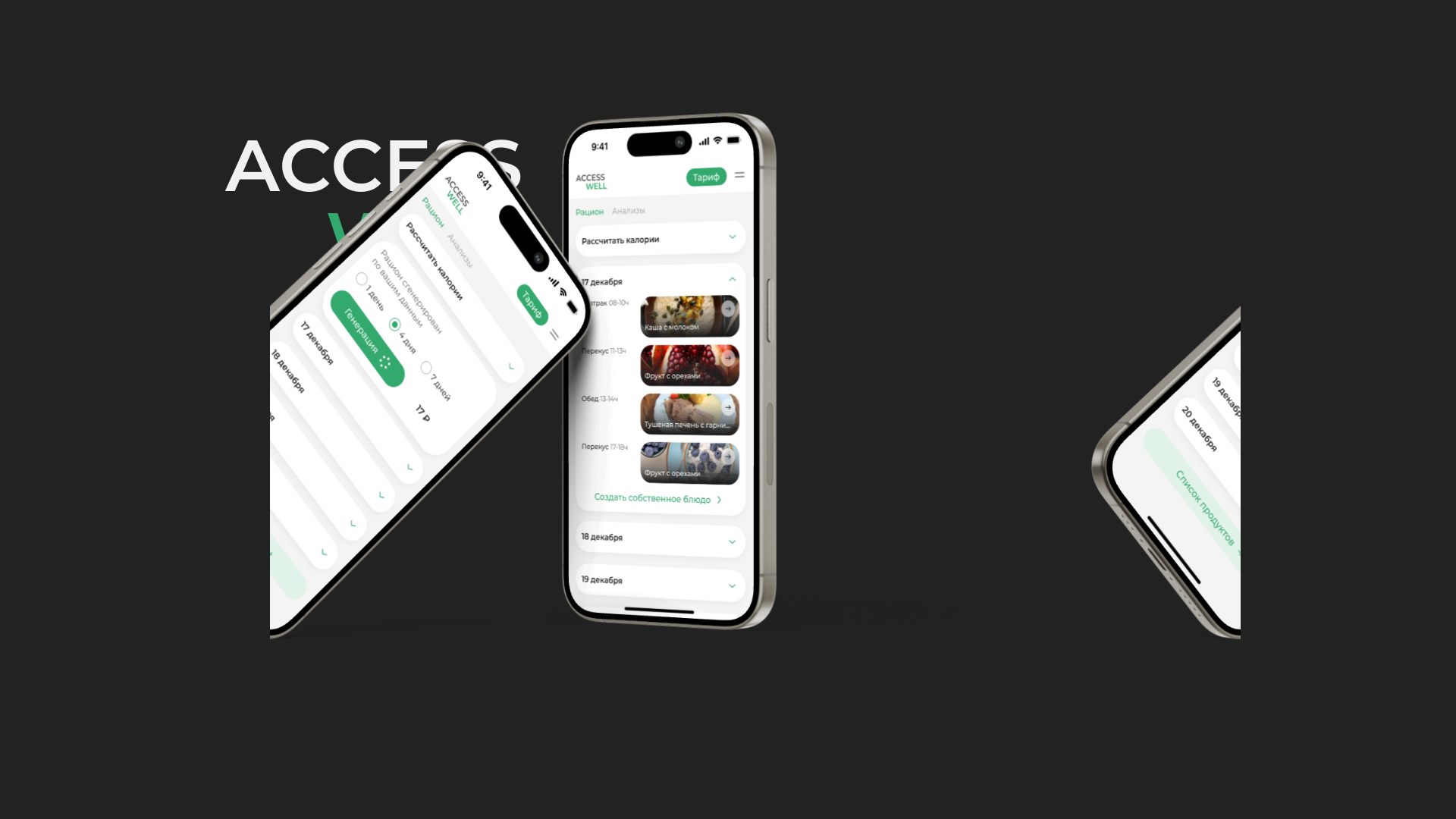
You can generate a diet for several days, calculate calories from a photo or description, and also make a list of products needed for several days

Results
At the design stage, I managed to:
At the design stage, I managed to:
- Build a clear product logic: Identified key user pains and barriers; Formed hypotheses across three main scenarios: meal planning, fast food logging, and grocery preparation; Designed an end-to-end flow that unifies nutrition, tracking, and planning
- Create a simple and scalable UX: Developed user scenarios, wireframes, and high-fidelity screens; Minimized manual steps and repetitive actions; Ensured the interface is easy to use even for users unfamiliar with food tracking
- Establish a consistent visual language: Maintained and expanded the UI kit; Provided complete component states, selections, empty states, error messages, and hints for proper implementation
Thank you for watching! 💚 I will be glad to cooperate.